Match the Break to Your Ability
Famous names are not automatically good classrooms. What matters is how a wave breaks, what lies underneath it and who else is in the water. Learn the three break types, then compare places with a long beginner reputation.
Beach, point or reef?
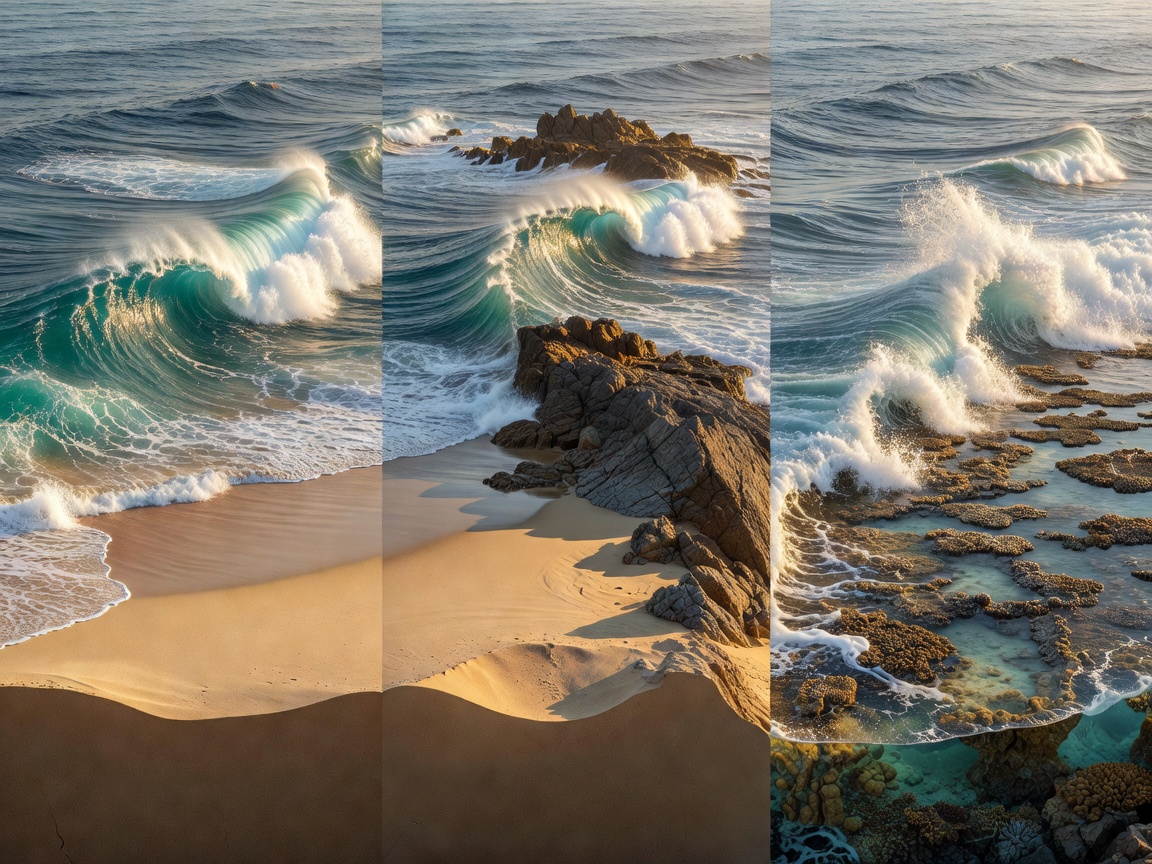
Every surf spot is shaped by what the wave meets as it reaches shallow water. That bottom decides how steep the wave becomes, how predictable it is and how much it hurts to fall.
| Break type | What's underneath | For beginners |
|---|---|---|
| Beach break | Sand, with shifting sandbars | Usually the best start. Soft landing, lots of whitewater, but rips form between bars. |
| Point break | A headland or rocky point | Gentle points give long, slow rides. Rocks and strong currents demand care. |
| Reef break | Coral or rock shelf | Mostly for experienced surfers. A few soft reef waves suit learners with guidance. |
Breaks with a long beginner reputation
These places are known worldwide for gentler waves or strong learning infrastructure. Their character is enduring, but conditions change daily and seasonally. Always check with local lifeguards or schools before paddling out.
Waikiki
Oʻahu, Hawaii, USA
BeginnerThe historic home of modern surfing, where Duke Kahanamoku and the beach boys of the early twentieth century shared the sport with visitors. Breaks such as Canoes and Queens roll in slowly over reef, giving long rides on big boards.
Watch for: heavy crowds, shallow reef at low tide, surfers of every level sharing the same peaks.
Fistral Beach
Newquay, Cornwall, England
BeginnerIntermediateBritain's best-known surf beach and a long-time contest venue. Its wide sandy bay, seasonal RNLI lifeguard patrols and many surf schools make it a natural learning base on small days.
Watch for: powerful surf in bigger Atlantic swells, cold water outside summer, crowding at the peaks.
Croyde Bay
North Devon, England
IntermediateA popular beach break with a lively surf culture. Its waves are famous for turning hollow and fast around low tide, which makes it better for learners at gentler tide stages and in small swell.
Watch for: low-tide shore dump, rips, packed summer line-ups.
Noosa Heads
Queensland, Australia
BeginnerA string of right-hand point breaks along Noosa National Park. First Point near Main Beach is a classic soft, peeling longboard wave and the heart of Noosa's long-running longboard culture.
Watch for: crowds of skilled longboarders, rocks along the points, large swells from cyclones.
Bondi Beach
Sydney, New South Wales, Australia
BeginnerPatrolled by lifeguards and volunteer surf lifesavers, with lessons common along its sandy curve. Its well-known rip channels make it a good place to learn how to read flags and currents.
Watch for: strong rips, swimmers between the flags, summer crowds.
Muizenberg
Cape Town, South Africa
BeginnerA long, gently sloping False Bay beach with soft, rolling waves and famous painted bathing boxes. It is often called the birthplace of surfing in South Africa and hosts the Shark Spotters programme.
Watch for: cool water, wind changes, listening to Shark Spotters flags.
Imsouane Bay
Near Agadir, Morocco
BeginnerA sheltered bay known for one of the longest, slowest right-hand waves in North Africa. Its patient, peeling walls make it popular with longboarders and learners.
Watch for: busy line-up, boats in the fishing harbour, rocks near the point.
Kuta Beach
Bali, Indonesia
BeginnerA long sandy beach break where many visitors take their first lessons. It contrasts sharply with Bali's famous reef breaks, which are for experienced surfers only.
Watch for: rips, warm-water sun exposure, strong currents on bigger days.
San Onofre State Beach
Southern California, USA
BeginnerThe break known as Old Man's has a decades-long reputation for slow, friendly longboard waves over a cobbled bottom, and a relaxed, family-orientated beach culture.
Watch for: cobblestones underfoot, mixed abilities, wetsuit needs most of the year.
Lahinch
County Clare, Ireland
BeginnerIntermediateA broad beach break on the west coast with lifeguards in summer and a well-established surf school scene. It offers a sheltered option when bigger Atlantic swells hit nearby reefs.
Watch for: cold water needing a thick wetsuit, rapid weather changes, rocks at the edges.
How to judge any beach when you arrive
- Watch a full set. Waves come in groups. Wait long enough to see the biggest ones.
- Find the channel. A gap where waves don't break is likely a rip. Note where it is and stay clear.
- Count the crowd. If the line-up is packed with skilled surfers, find an emptier patch of whitewater instead.
- Ask a local. Lifeguards and surf school staff will tell you about hazards you cannot see from the car park.
A "beginner" label here describes a beach's typical character on small days. It is not a guarantee about conditions on the day you visit.