Understand What Is Under Your Feet
A good beginner board is boring in the best way: long, wide, thick and forgiving. Here is the vocabulary, the reasoning and the set-up that makes your first waves easier.
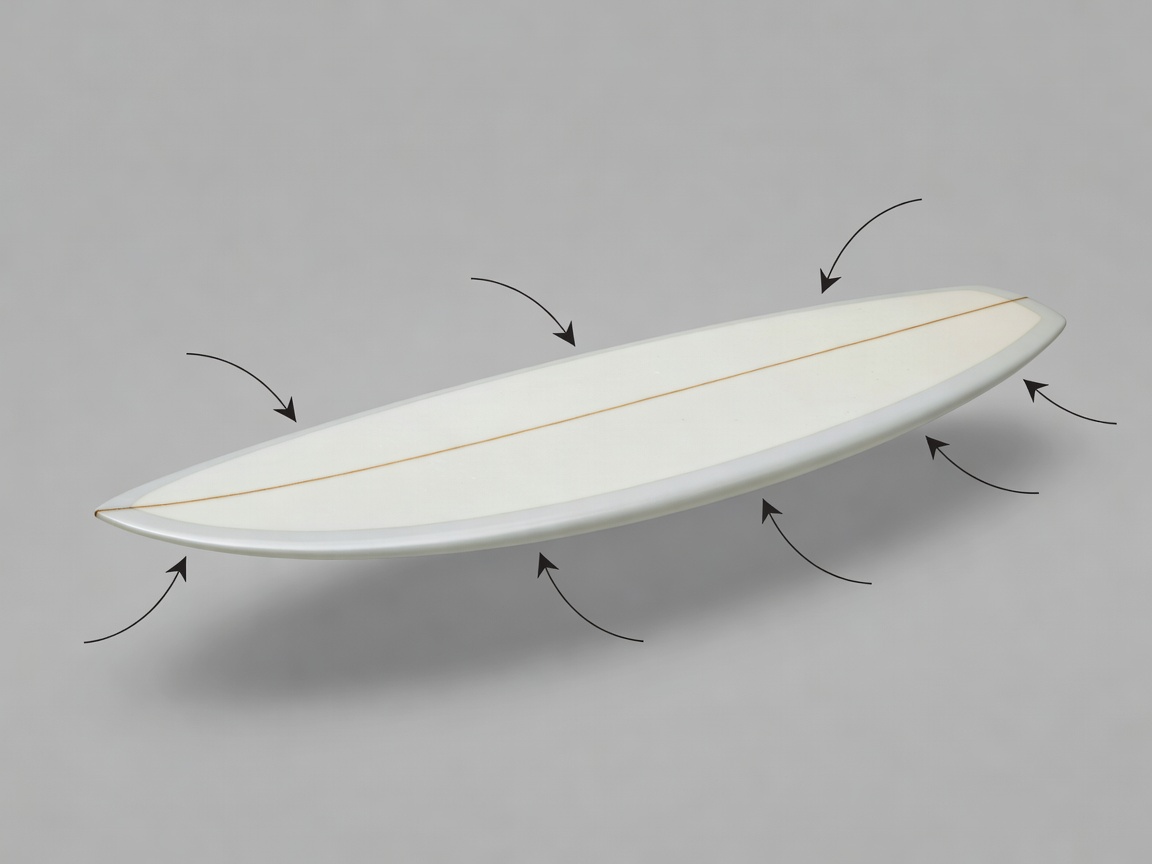
Board anatomy
Instructors will use these words constantly. Knowing them means you can follow instructions in the water.
- Nose
- The front. A rounder, wider nose adds stability and paddle power.
- Tail
- The back, where the fins and leash plug sit. Your back foot goes here.
- Deck
- The top surface you lie and stand on. Hard boards need wax for grip; soft-tops are textured.
- Rails
- The edges. Thick, round rails are forgiving; thin, sharp rails bite and turn faster.
- Rocker
- The curve from nose to tail. Flatter boards paddle faster and catch small waves easily.
- Stringer
- A thin strip of wood running down the middle of many boards to add strength.
Board types compared
Lengths are given in feet because that is how surfboards are sold almost everywhere. The table describes typical use, not strict rules.
| Type | Typical length | Feel | Beginner fit |
|---|---|---|---|
| Soft-top (foamie) | 7'–9' | Stable, buoyant, gentle when it hits you | Best start |
| Longboard | 9' and up | Glides early, smooth, heavy to carry | Good |
| Mini-mal / funboard | 7'–8'6" | A middle ground; easier to turn | Next step |
| Fish | 5'–6'6" | Short, wide, fast in small waves | Later |
| Shortboard | 5'6"–6'6" | Low volume, needs steep, powerful waves | Advanced |
Why volume matters more than length
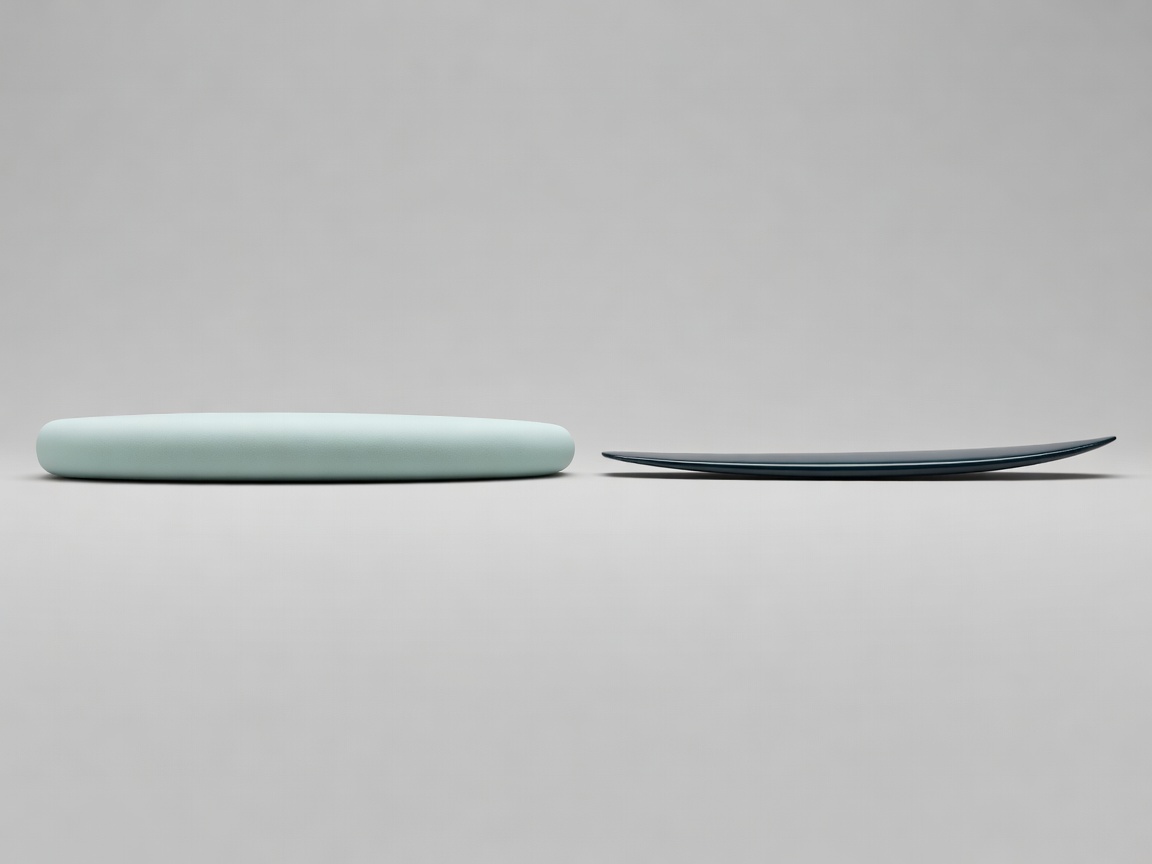
Volume is the total amount of foam in a board, listed in litres. More volume means more float: you sit higher, paddle faster and catch waves earlier. Many instructors suggest a first board with volume well above your body weight in kilograms, which is why soft-tops around 8 to 9 feet are the standard teaching board.
Two boards of the same length can differ hugely in volume, because width and thickness count too. If you are tall, heavy, or surfing in a thick winter wetsuit, aim for the floatier end. As your paddling and balance improve, you can drop volume gradually. Jumping straight to a short board usually means fewer waves and slower progress.
Soft-top or hard board?
Soft-tops have a foam deck and a slick base. They are gentler when they hit you or the person next to you, which is why schools use them. Fibreglass and epoxy boards are lighter and more responsive, but they ding easily and hurt more in a collision.
Fins: what they do
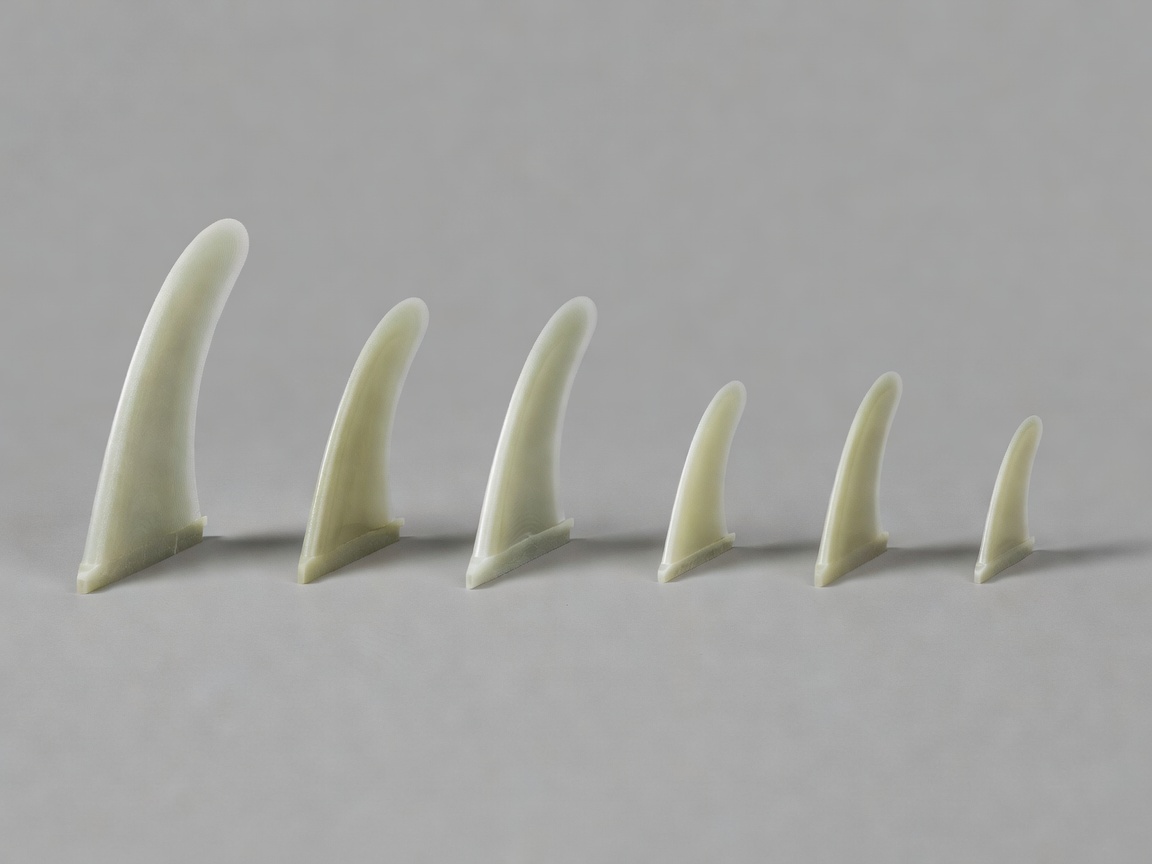
Fins keep the tail from sliding sideways and let you steer. Surfer and inventor Tom Blake is credited with adding the first fixed fin to a surfboard in 1935; before that, riders steered by dragging a foot.
Single fin
One large central fin. Smooth and steady, common on longboards.
Thruster
Three fins. The most common set-up, balancing grip and turning.
Twin & quad
Two or four fins. Loose and fast, often on fish shapes.
Most removable fins use one of two plug systems, FCS or Futures. Check which your board uses before buying spare fins. Beginner soft-tops usually come with flexible plastic fins that are less likely to cut you.
Leash and wax set-up
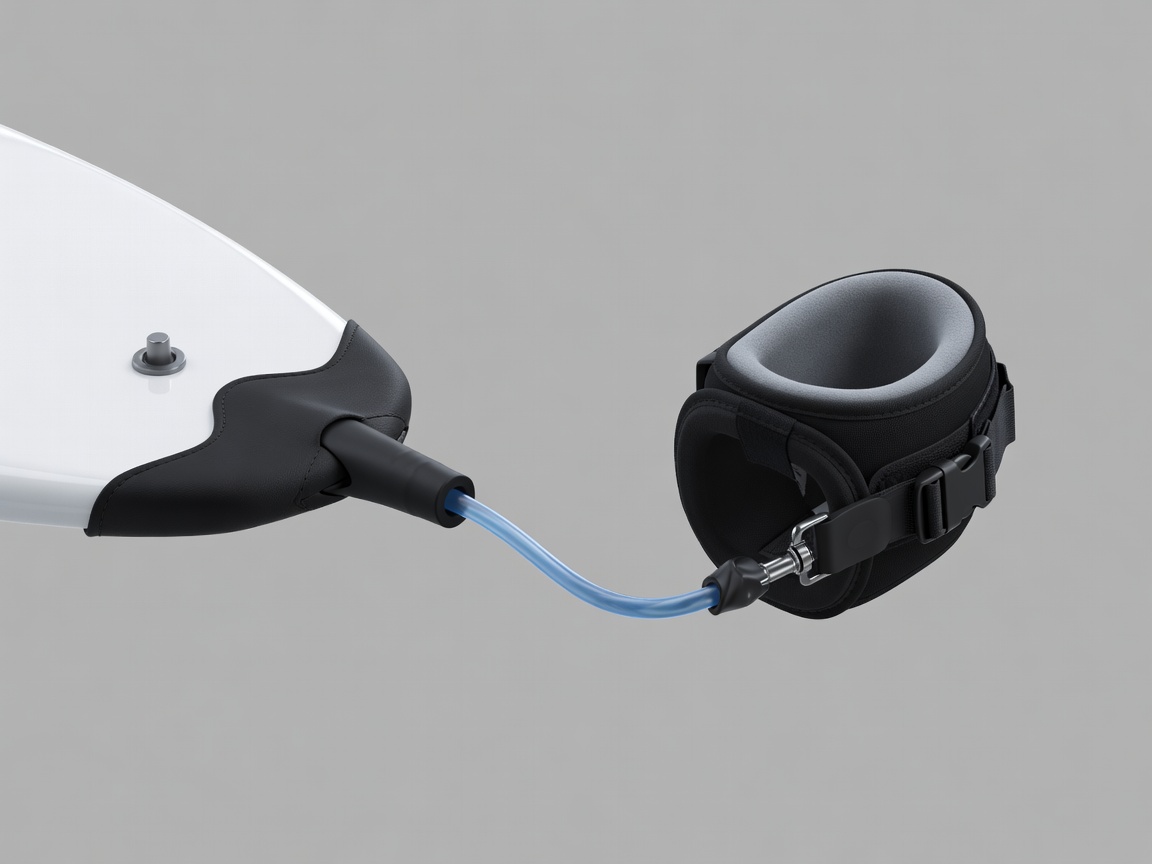
- Choose the length. A leash roughly the length of your board, or a little longer, is the usual guide.
- Attach the string. Thread the leash string through the plug in the tail and fasten the rail saver strap.
- Back foot only. Wrap the cuff around the ankle of your back foot, with the cord pointing behind you.
- Wax a hard board. Apply a harder base coat, then a top coat matched to water temperature, in small circles where your feet and chest go.
Soft-tops usually need little or no wax. Fibreglass boards always do.
Rent first, buy later
Hiring a soft-top and wetsuit for your first few sessions lets you learn what height, volume and fin set-up suit you before spending money. When you do buy, a second-hand high-volume board is a sensible first purchase.