Keep Your Setup Ready
Salt, sun, sand and heat wear surf gear down faster than waves do. Ten minutes of care after each session keeps your board floating, your leash reliable and your wetsuit warm.
The after-session routine
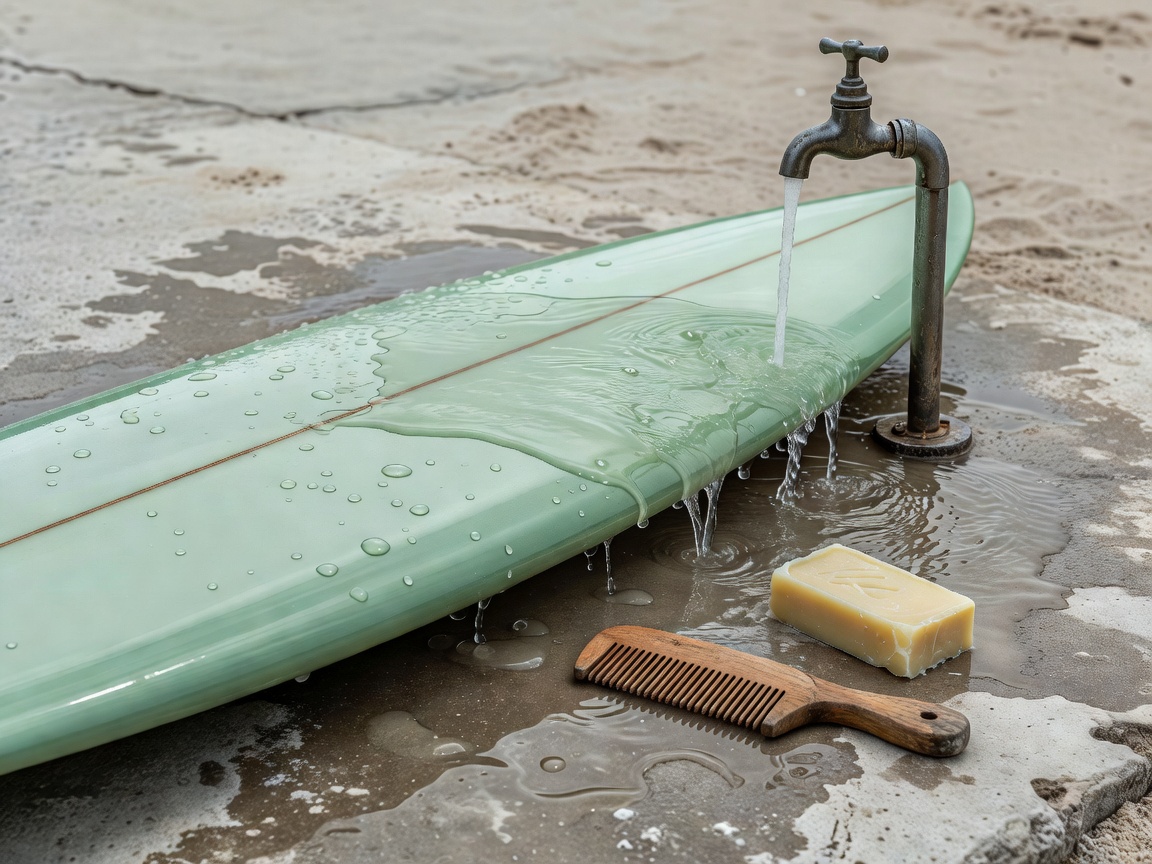
- Rinse everything in fresh water. Board, fins, leash and wetsuit. Salt crystals and sand grind away at surfaces and stitching.
- Check for dings. Run your hand along the rails and nose. Cracks in fibreglass let water into the foam core.
- Inspect the leash. Look for nicks in the cord, a stiff swivel, or a fraying leash string at the plug.
- Dry in the shade. UV light yellows boards, weakens foam and breaks down neoprene.
- Store flat or on a rack. Keep it indoors, away from heaters, fins removed or protected.
Heat is the silent board killer
A board left in a hot car or face-up in direct sun can suffer delamination, where the fibreglass skin separates from the foam and bubbles up. Wax melts into a slick mess and soft-top decks can blister. If you must leave a board in a vehicle, use a reflective board bag and park in the shade, but the best answer is not to leave it at all.
Racks and bags
Use padded roof racks, fins facing up and nose pointing forward, strapped firmly. A padded board bag prevents most car-park dings.
Cool and dry
Store boards horizontally on a padded rack or upright in a bag, away from radiators and damp garages.
Refresh the grip
Scrape old, dirty wax with a comb when it gets slick, then reapply base and top coats.
Dings: when to fix, when to get help
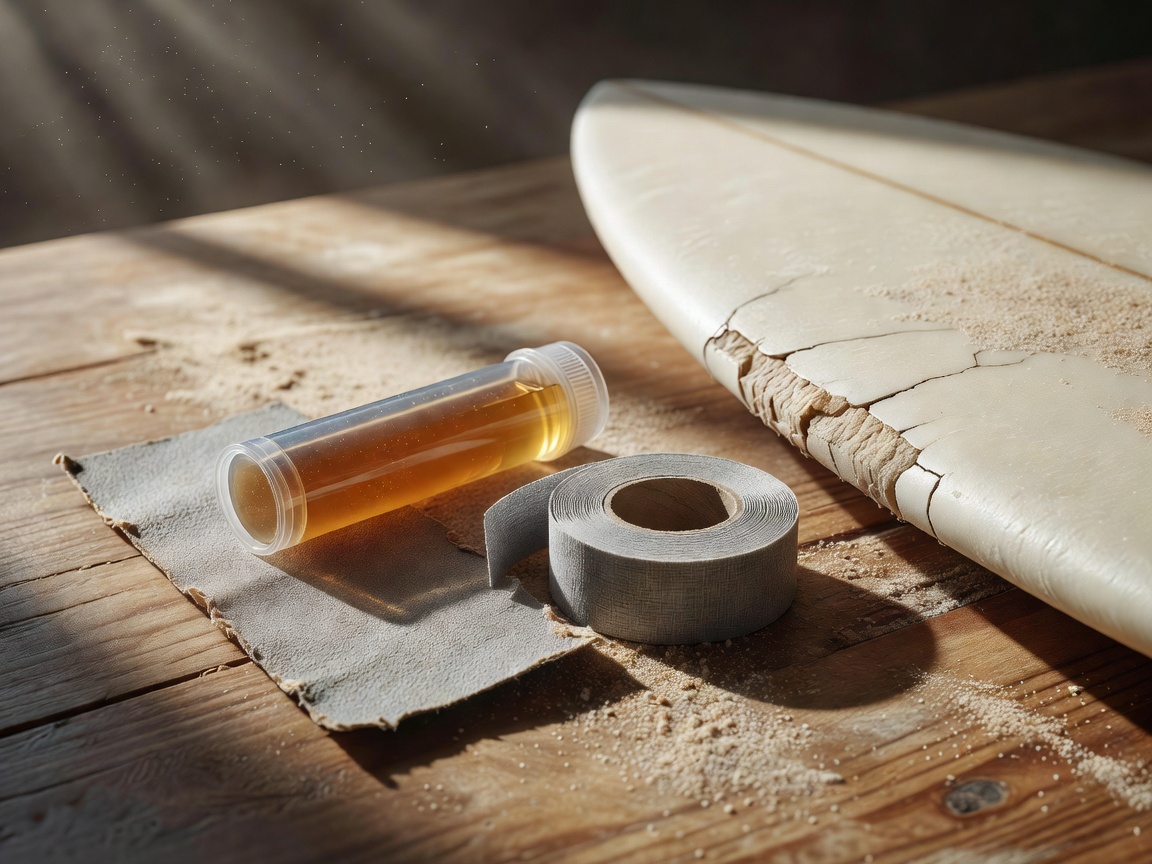
A ding is any crack, dent or hole in a board. Pressure dents, the shallow dips from your knees and heels, are normal and harmless. Anything that breaks through the outer glass is different: foam soaks up water like a sponge, gets heavy and starts to rot.
If you see an open ding, get out of the water, dry the board and keep it out of the surf until it is sealed. Small cracks can be covered temporarily with ding tape or repaired with a UV-curing resin kit following its instructions. Large breaks, damage near the fin boxes, or a snapped board are jobs for a professional repairer.
Soft-tops are more forgiving, but tears in the foam deck or a peeling slick base still let water in. Patch them early.
Fins and leash checks
Before each session, push each removable fin gently to make sure it sits firmly in its box and that the grub screws, if your system uses them, are tight. Rinse sand out of fin boxes, because grit makes fins hard to remove and wears the plugs.
Leashes are your connection to a large flotation device. Replace one that shows deep nicks, stretching or a stiff swivel. Change the small leash string at the tail plug as soon as it frays, since it is the most common failure point.
Wetsuit care
Rinse your wetsuit inside and out in cool fresh water after every session. Hot water damages neoprene. Hang it folded over a wide hanger at the waist, not by the shoulders, which stretch under the weight of water. Dry it in the shade, inside out first, then right side out.
Avoid sitting on rough concrete or rocks while wearing it, and use a mat when changing. Small tears can be glued with neoprene cement before they grow.
Care for the beach too
Your setup only matters if the water is clean enough to surf. Take your broken leashes, wax wrappers and fin screws home. Organisations such as the Surfrider Foundation run beach cleans and water-quality programmes that welcome surfers of every level.